

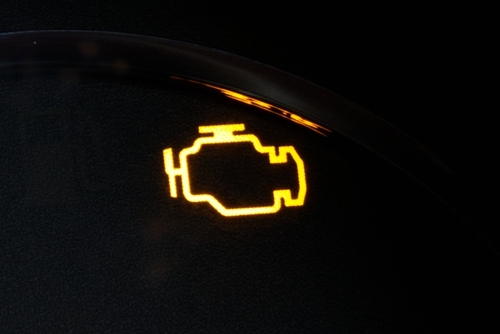
That little orange engine icon has a way of ruining an otherwise good day, doesn't it? Bell & Bell GMC in Little River, SC sees this question come up constantly, and the good news is that a check engine light usually isn't cause for panic. Here's what it means, what actually works when it comes to clearing it, and the “How to turn off check engine light” methods that are safe to try at home.
Key Takeaways
- A check engine light can mean anything from a loose gas cap to a failing sensor — it doesn't tell the whole story on its own.
- Disconnecting the battery or using an OBD-II scanner are the two most common ways drivers clear the light themselves.
- Clearing the light doesn't fix the problem — if the underlying issue is still there, the light will come back.
- A steady light usually allows for a short drive to get it checked; a flashing light means stop as soon as it's safe.
- A quick diagnostic scan is the only real way to know what's actually going on under the hood.
How Do You Reset a Check Engine Light?
The quickest way to reset a check engine light is with an OBD-II scanner, which plugs into the port under the dashboard and clears the stored trouble code in seconds. Disconnecting the battery for about 15 minutes works too, since it wipes the computer's short-term memory along with the code.
Plenty of drivers ask about a simple trick to turn off the check engine light without buying any tools, and there is one worth knowing: driving the car for a few cycles — a mix of highway and stop-and-go — can sometimes let the computer clear a minor, one-time glitch on its own. This works best for small hiccups, like a gas cap that wasn't seated quite right or a sensor that briefly misread something. It won't do anything for a real mechanical or electrical fault, though. The code will simply return, often within a day or two, because the root cause hasn't gone anywhere. Think of the light as a messenger, not the message itself. Shutting it off without addressing what triggered it just means driving blind until it flips back on.
- OBD-II scanner: plug in, read the code, clear it manually
- Battery disconnect: pull the negative terminal for 15–20 minutes
- Drive-cycle reset: let the computer clear a minor, self-corrected glitch naturally

Why Does the Check Engine Light Come On in the First Place?
Most of the time, the light is triggered by something in the emissions, fuel, or ignition system that's drifted slightly out of spec. It could be as small as a gas cap or as involved as a sensor that needs replacing.
Little River's humidity and salt air can be tough on underhood components, including sensors and wiring connectors near the engine bay. Vehicles that see a lot of short trips around town are also more prone to triggering the light, since the engine doesn't always reach full operating temperature long enough to burn off condensation or complete an emissions test cycle. Older vehicles with higher mileage naturally have more worn parts that can drift out of range too. None of this means something catastrophic is happening — it usually just means it's time for a look under the hood.
| Cause | What's Happening | How Serious Is It? |
|---|---|---|
| Loose or damaged gas cap | Fuel vapors are escaping, throwing off the evaporative emissions system | Minor — often fixes itself |
| Worn oxygen sensor | Sensor can't read exhaust gases accurately, so fuel mixture gets thrown off | Moderate — hurts mileage over time |
| Failing catalytic converter | Emissions component isn't converting exhaust gases properly | Serious — can affect performance |
| Bad spark plugs or ignition coils | Engine misfires, which can feel like a rough idle or hesitation | Moderate to serious |
| Mass airflow sensor issue | Engine gets the wrong air-to-fuel ratio, affecting power and economy | Moderate — worth a scan soon |
Is It Safe to Keep Driving with the Check Engine Light On?
A steady light usually means it's fine to keep driving for now, though a diagnostic check shouldn't be put off too long. A flashing light is a different story — that's the engine telling drivers to pull over and stop driving as soon as it's safely possible.
A steady light often points to something gradual, like a sensor drifting out of range or an emissions component wearing down. Fuel economy might dip a little, or the engine might feel slightly less responsive, but there's typically no immediate danger. A flashing light almost always points to an active engine misfire, which can send unburned fuel into the catalytic converter and cause expensive damage fast. Little River, SC drivers who notice a flashing light, rough idling, or a burning smell should get to a service bay right away rather than waiting it out. When in doubt, a quick round of engine service in Little River, SC at Bell & Bell GMC clears up exactly what's going on and how urgent it really is.
Understanding the Light Goes a Long Way

A check engine light doesn't have to be stressful once the basics make sense. Sometimes it's nothing more than a gas cap that needs a firmer twist, and sometimes it's a heads-up that a part needs attention before it turns into a bigger repair. Either way, Bell & Bell GMC in Little River, SC is set up to run a full diagnostic scan and explain exactly what the code means in plain language — no guessing required.
Noticing that light more than once, or dealing with a flashing warning? Scheduling a quick diagnostic at Bell & Bell GMC is an easy next step, and our service team can usually get an answer the same day. While there, it's also worth browsing current inventory in case a newer model with updated diagnostics and driver-assist features makes sense down the road.
FAQ
Can a check engine light turn off by itself?
Yes, if the issue that triggered it was minor and temporary, like a loose gas cap, the light can go off after a few successful drive cycles.
Will disconnecting the battery reset the check engine light?
Yes, disconnecting the negative terminal for around 15–20 minutes typically clears the stored code, though it will also reset the radio and clock.
Does an auto parts store check engine lights for free?
Many do offer free code readings, but a dealership diagnostic goes further by interpreting what the code actually means for that specific vehicle.
Is it bad to ignore a check engine light for a long time?
It can be — small issues left unaddressed often turn into bigger, more expensive repairs, especially when the light involves emissions or ignition components.
Why did my check engine light come back after I cleared it?
If the light returns, the underlying problem is still there. Clearing the code only resets the warning, not the issue that caused it.
How much does a diagnostic scan cost at Bell & Bell GMC?
Pricing can vary depending on the vehicle and current service specials, so it's best to contact our service department directly for an accurate quote.